

| Name | Value |
|---|---|
| Date of Issue | November 13, 2025 |
| Year | 2025 |
| Quantity | 1,980,000 |
| Denomination |
 PERMANENT™ (P). PERMANENT™ (P).Current monetary value: $1.24. |
| Postal Administration | Canada |

| Condition | Name | Avg Value | Actions |
|---|---|---|---|
| No Prices for stamp | |||

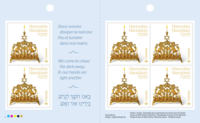
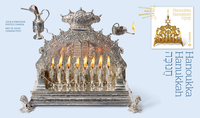
This stamp marks the Jewish festival of Hanukkah, one of the more widely embraced celebrations in the Jewish calendar.
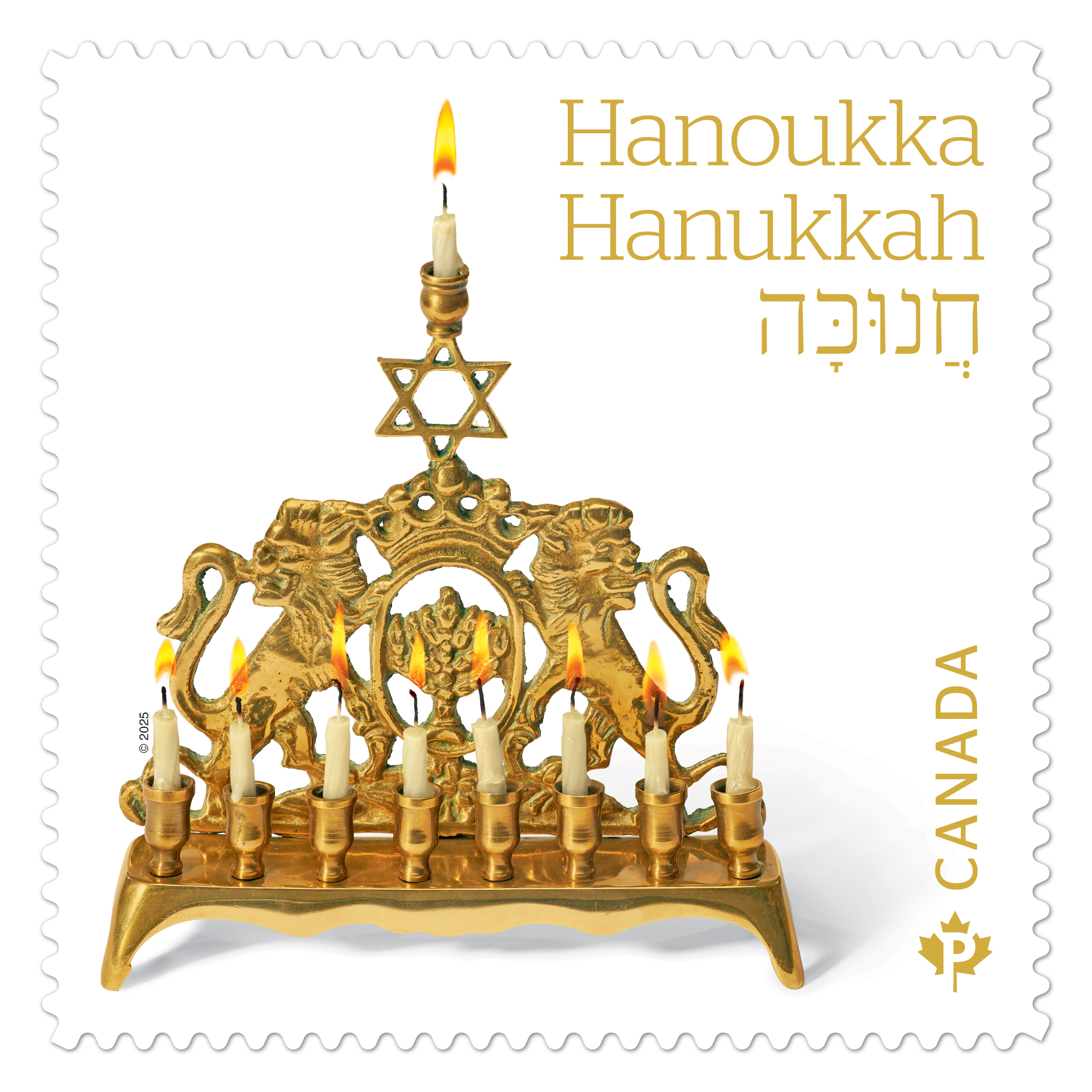
In celebration of Canada’s cultural diversity, this stamp marks the Jewish festival of Hanukkah – one of the more widely embraced celebrations in the Jewish calendar.
The Hanukkah stamp is one of several annual issues that mark events of importance to Canada’s culturally diverse population. The others include Eid, Diwali and Christmas.
Hanukkah, also called the Festival of Lights, commemorates the rededication of the Temple in Jerusalem (Judaism's holiest site) after the Jewish people reclaimed it around 165 BCE.
According to Jewish tradition, the Temple’s menorah was to burn continuously; however, there was enough oil to last only one day. Miraculously, it lasted the eight days it took to harvest, press and transport a fresh supply of oil.
This miracle of light and faith is commemorated each year through the kindling of a hanukkiyah, or menorah – a candelabrum bearing a row of eight candle or oil holders and a central “helper” candle, called a shamash, that is used to light the others.
Prayers, traditional songs and religious readings are often part of the lighting ceremony. Gift giving has also become a common practice – the traditional gift being small amounts of Hanukkah gelt in the form of either real money or chocolate coins.
Fried foods – such as latkes and jelly doughnuts – are strongly associated with Hanukkah, while olives, olive branches and cruses of oil are sometimes used to symbolize the miracle of the oil at the heart of the story behind the festival.
The dreidel – a spinning top that children play with during the holiday – also has a special connection. The Hebrew letters on the four sides of the dreidel stand for the phrase Nes gadol haya sham, which means, “A great miracle happened there.”
The lion is an emblem of strength and courage that holds a special place in Jewish culture. As a symbol of the Tribe of Judah and its descendants, which include King Solomon and King David, it has also come to represent the Jewish people.
The central figures on the brass hanukkiyah featured on this year’s Hanukkah stamp pay homage to King Solomon, whose throne was flanked by statues of lions. Other elements of its design recall the story behind Hanukkah. The crown represents the Torah and the return of the Jewish kingship after the Maccabees recaptured Jerusalem. The menorah positioned below the crown is a reminder of the one that burned continuously in the Temple of Jerusalem. A Star of David holds the helper candle (shamash) used during Hanukkah’s nightly candle-lighting ritual.
The artifact was donated to the Aron Museum at Temple Emanu-El-Beth Sholom in Montréal, Quebec, in 1960 in memory of founding benefactor Josef Aron. Crafted in Western Europe in the early 1900s, it is one of more than two dozen Hanukkah menorahs in the museum’s collection. The others date back as early as the 18th century.