


| Name | Value |
|---|---|
| Date of Issue | March 10, 2025 |
| Year | 2025 |
| Quantity | 330,000 |
| Denomination |
 PERMANENT™ (P). PERMANENT™ (P).Current monetary value: $1.24. |
| Postal Administration | Canada |

| Condition | Name | Avg Value | Actions |
|---|---|---|---|
|
M-NH-VF
|
Mint - Never Hinged - Very Fine | $1.84 | |
|
U-VF
|
Used - Very Fine | $0.80 |

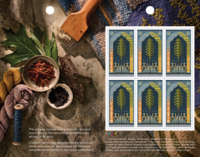
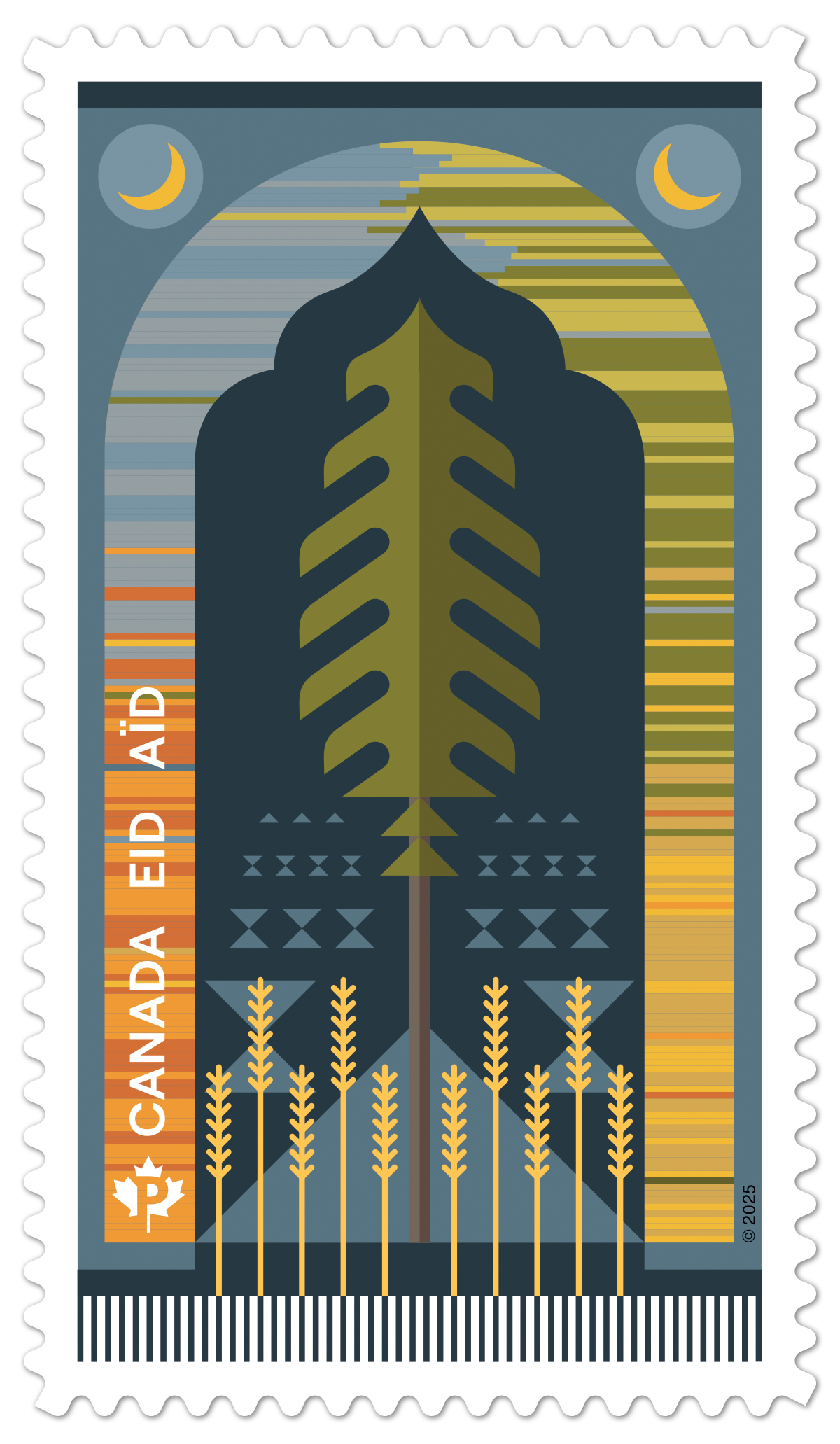
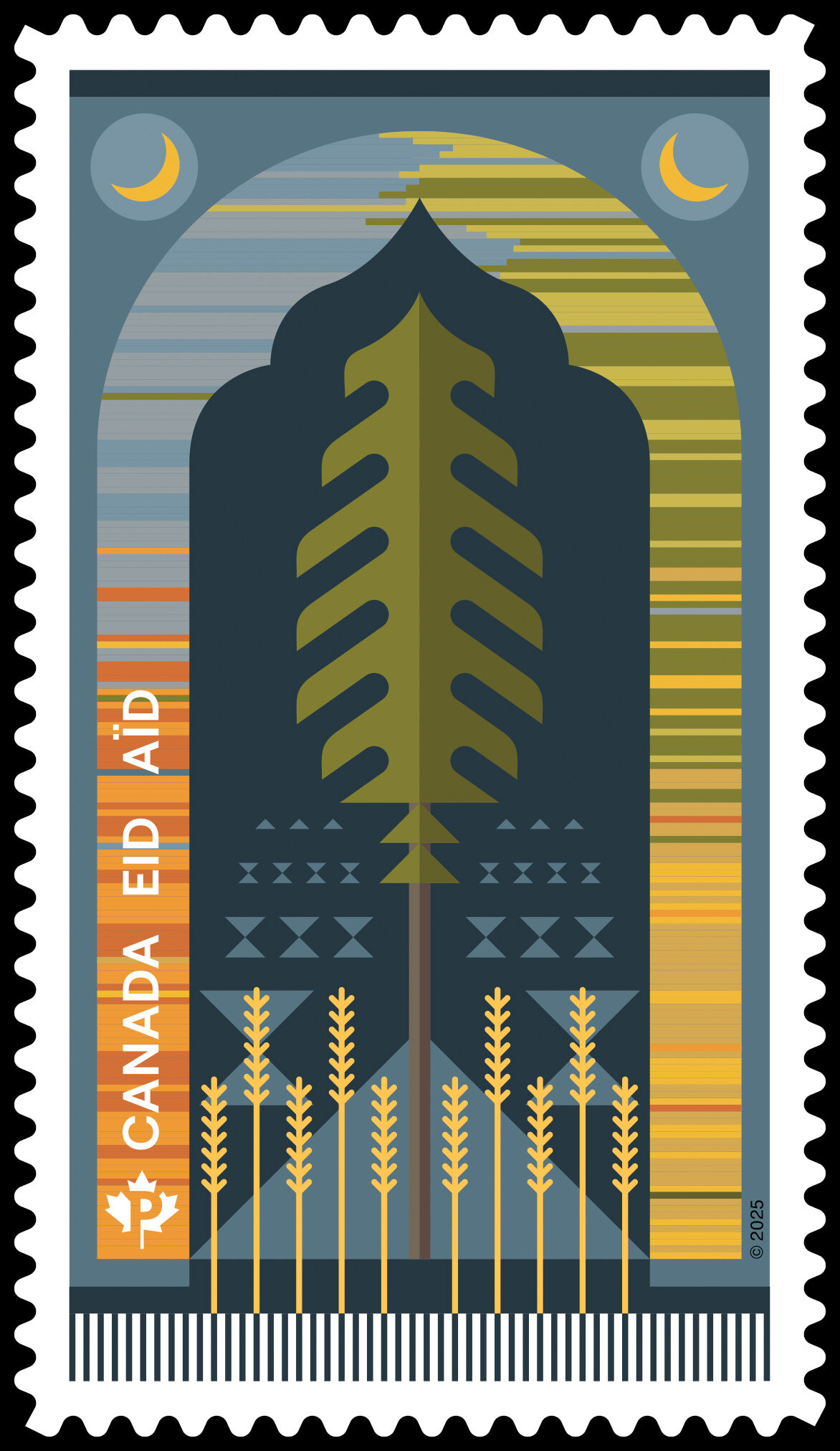
This stamp commemorates the festivals of Eid al-Fitr and Eid al-Adha. Celebrated by Muslims all over the world – and by more than one million Muslims in Canada – both events can last several days and include communal prayers and feasts, visits with family, gift giving and acts of charity. In 2025, they take place in March and June, respectively.
The Eid stamp is one of several annual issues that mark events of importance to Canada’s culturally diverse population. The others include Diwali, Hanukkah and Christmas.
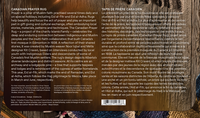
Prayer is a pillar of Muslim faith practised several times daily and on special holidays, including Eid al-Fitr and Eid al-Adha. Rugs help beautify and focus the act of prayer and play an important part in gift giving and cultural exchange, often embodying local stories, materials, patterns and techniques.
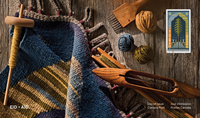
The Canadian Prayer Rug – a project of the charity IslamicFamily – celebrates the deep and enduring connection between Indigenous and Muslim peoples and the multi-faith collaboration that built Canada’s first mosque in Edmonton in 1938. A reflection of their shared stories, it was created by Muslim weaver Noor Iqbal and Métis designer Kit Craven, based on interviews conducted by local youth with Indigenous Elders and descendants of some of Canada’s first Muslim settlers.
The rug’s design depicts Alberta’s diverse landscapes and distinct seasons. At its centre are an archway and a lodgepole pine – a tree that supports teepees and lodges and is reminiscent of the cypress of settler homelands. This year, Eid al-Fitr, which marks the end of Ramadan, and Eid al-Adha, which follows the Hajj pilgrimage to Mecca, take place in March and June, respectively.
Eid al-Fitr, or the Festival of Breaking the Fast, marks the end of Ramadan, the month of fasting. Fasting, which is observed from sunrise to sunset, is one of the most distinctive practices in the Islamic religion. In 2025, Eid al-Fitr takes place in March.
Eid al-Adha, or the Festival of Sacrifice, marks the end of the Hajj pilgrimage, in which millions of Muslims journey to one of the holiest sites in Islam – the Kaaba in Mecca, Saudi Arabia. The festival also honours the prophet Abraham (Ibrahim), a revered figure within Judaism, Christianity and Islam, for his willingness to sacrifice his son as an act of obedience to God. Before Ibrahim could sacrifice Isma’il (identified as his son Isaac in the Jewish and Christian traditions), God substituted a lamb. Also called Eid al-Kabir, or the Greater of the two Eids, the festival takes place in June in 2025.
Both festivals embody central Islamic practices and values, including empathy and sacrifice for those in need and appreciation for one’s community and greater humanity. These are expressed through communal prayers and feasts, gift giving and acts of charity.
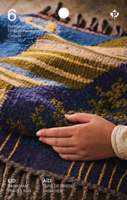
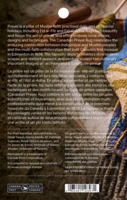
The booklet cover and the inside and back of the booklet feature photographs of the original, handwoven Canadian Prayer Rug. The inside and back include images of some of the tools and materials that would have been used to create it.
On the inside (left to right) are a spool and hanks of yarn; bowls of logwood and black tea, red oak and willow leaves, and bark (used as dyes); and a weaving raddle.
On the back are another raddle and shuttle, as well as a spool. Also featured are a short text on the stamp subject, and credit and caption information.