


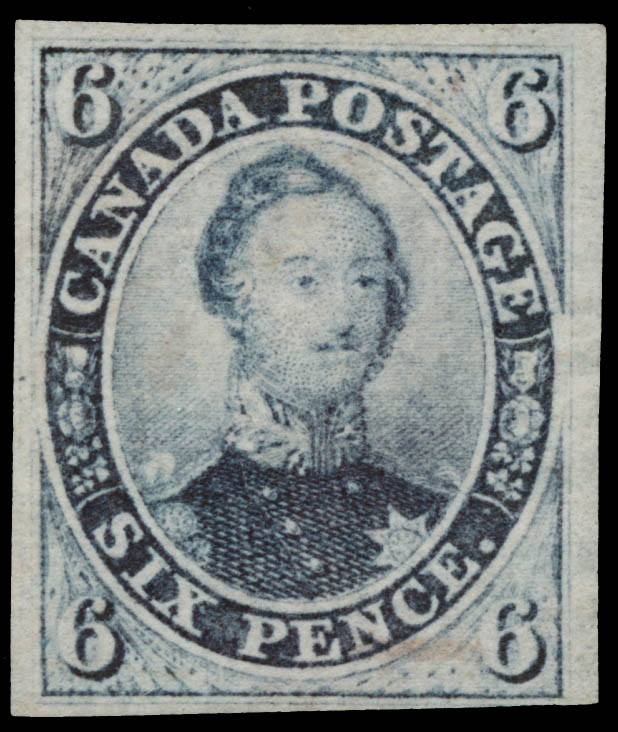
| Name | Value |
|---|---|
| Date of Issue | May 12, 1851 |
| Year | 1851 |
| Quantity | 100,400 |
| Denomination |
6d
|
| Perforation or Dimension | Imperforate = Non dentelé |
| Printer | Rawdon, Wright, Hatch & Edson. |
| Postal Administration | Canada |
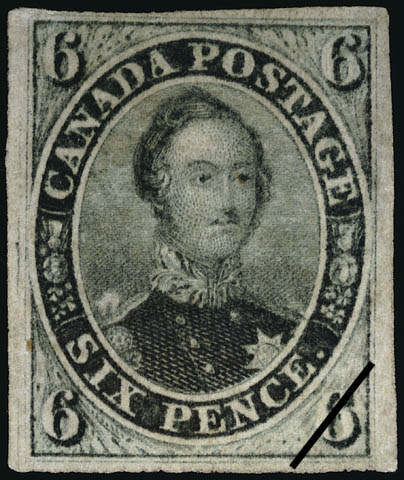
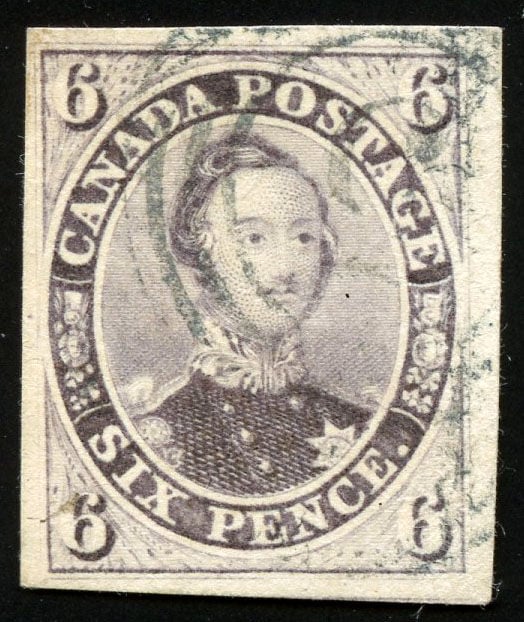



The first postage stamps issued by the Province of Canada featured the beaver on the 3-pence stamp, H.R.H. Albert, the Prince Consort on the 6-pence denomination, and Her Majesty Queen Victoria on the 12-pence.
These stamps were produced on laid paper without perforations. Rawdon, Wright, Hatch and Edison, the New York security printers, received the contract to print Canadian postage stamps, producing all the requirements until May 1, 1858. On that day the company name changed, following amalgamation, to the American Bank Note Company with headquarters remaining in New York City. The new firm continued the former printing contract until Canadian Confederation in 1867.
The portrait of H.R.H. Albert, the Prince Consort, came from a contemporary engraving of another portrait.